Saddle Fit & Nerve Impingement
As spring and show season begins it is essential we ensure our tack is fitted. Taking into account any growth or physiological change in musculature they may have experienced during the off season is essential. On the other side of the coin, if your horse is not in training or regular work, having an understanding of saddle fit can still benefit your horse’s comfort throughout each individual ride, ultimately benefiting your partnership.
When things like saddle fit are not considered, discomfort and muscle soreness become a factor. In other cases ill fitting tack can cause nerve impingement which leads to greater compensation patterns, uneven muscular development, and behavioral changes.
Cranial Nerve XI - The Accessory Nerve - is the motor nerve crucial for shoulder and neck movement, innervating the trapezius muscles and the sternocephalicus. This nerve runs along the withers right where the gullet of the saddle is positioned. As you can imagine, if the saddle is ill fitting and the gullet is putting pressure on the withers, innervation can be compromised. Compression of this area can result in resistance, muscle pain and contraction which will reverberate throughout the entire kinetic chain.
Compression of the Cranial Nerve signals the body to lock the longissimus and movement in the scapula and forearm is blocked. This results in the back of the horse dropping, the pelvis comes into an anterior rotation putting pressure on the hind end and can lead to kissing spine in the top line.
This is an example of ONE nerve subject to compression from ill fitting tack, you can imagine the repercussions throughout the entire body if more than one area of the horse is experiencing compression.
Compression can also lead to involuntary behaviors due to reflex points on the horse which can be misdiagnosed as behavior or rider error. Of course rider error, balance, strain and injury all come into play but starting from the ground up by addressing saddle fit can be the first step to alleviating some pressure and mitigating abnormal behavior.
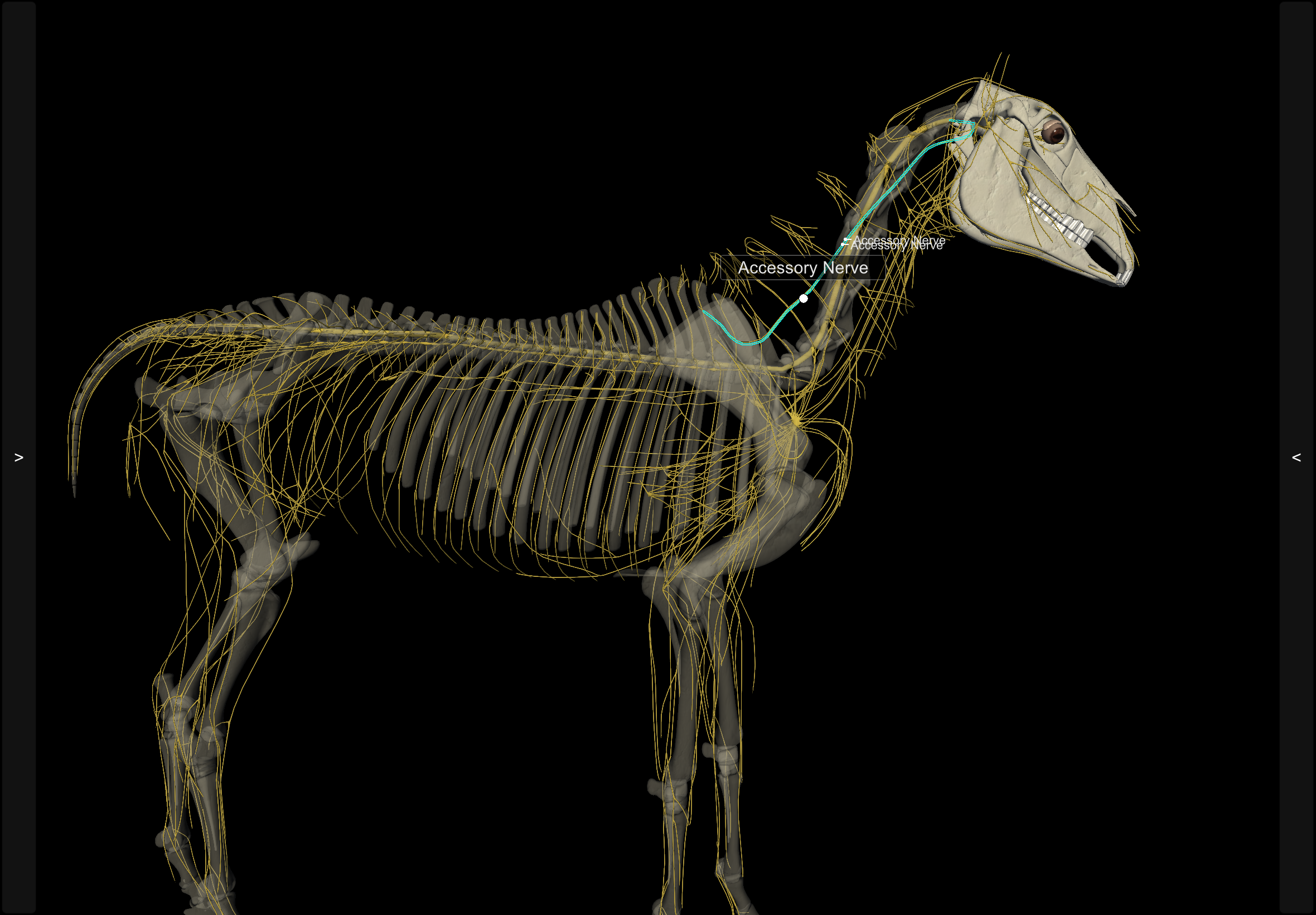
Source: 3D Horse Anatomy App
How the Western saddle should fit
Sits behind the scapula
Ensure 2-3 fingers of clearance above the withers
Gullet wide enough to avoid spinal compression
Saddle should sit level without tipping, rocking front to back or side to side
Deepest part of the seat in in alignment with the 12th-13th rib (center of gravity)
The skirt should not extend beyond the 18th rib to avoid lumbar pain and reflex point compression
Even panel pressure
Billets are perpendicular to the ground, while the girth allows for range of motion in the forelimb
How the English saddle should fit
Sits behind the scapula
Ensure 2-3 fingers of clearance above the withers
Gullet wide enough to avoid spinal compression
Saddle should sit level without tipping, rocking front to back or side to side
Deepest part of the seat in in alignment with the 12th-13th rib (center of gravity)
Even panel pressure
Billets are perpendicular to the ground, while the girth allows for range of motion in the forelimb
Ensure that the saddle gives the withers clearance of about 2-3 fingers and that the gullet also allows for clearance on either side of the withers to accommodate shoulder rotations upwards and backwards. The panels of the saddle must make consistent contact with the horse’s back to ensure that the rider weight is distributed evenly.
The girth should be approximately 3-4 inches behind the horse’s elbow to prevent restriction of movement in the forelimb and positioned evenly on each side of the horse's rib cage. It should be secure but not so tight that you are unable to fit your hand between the girth and the horse’s belly.
Signs that the saddle does not fit could be behavior change in the horse, mobility change, as well as any rocking or slipping in the saddle. Pinching and saddle sores, uneven sweat marks can also begin to arise. Muscle atrophy can start to slowly occur as well, leading to further compensation and more difficulty in maintaining true collection.
It is important to keep an eye out for proper saddle fit as your horse’s body changes with the seasons just as ours do. Continue to check and maintain your knowledge of biomechanics, saddle fit as well as how changes in your own body can directly alter your horses movement patterns.